
The Case for Global Threat Intelligence: Why the Old Way of Tracking World Events Doesn't Work
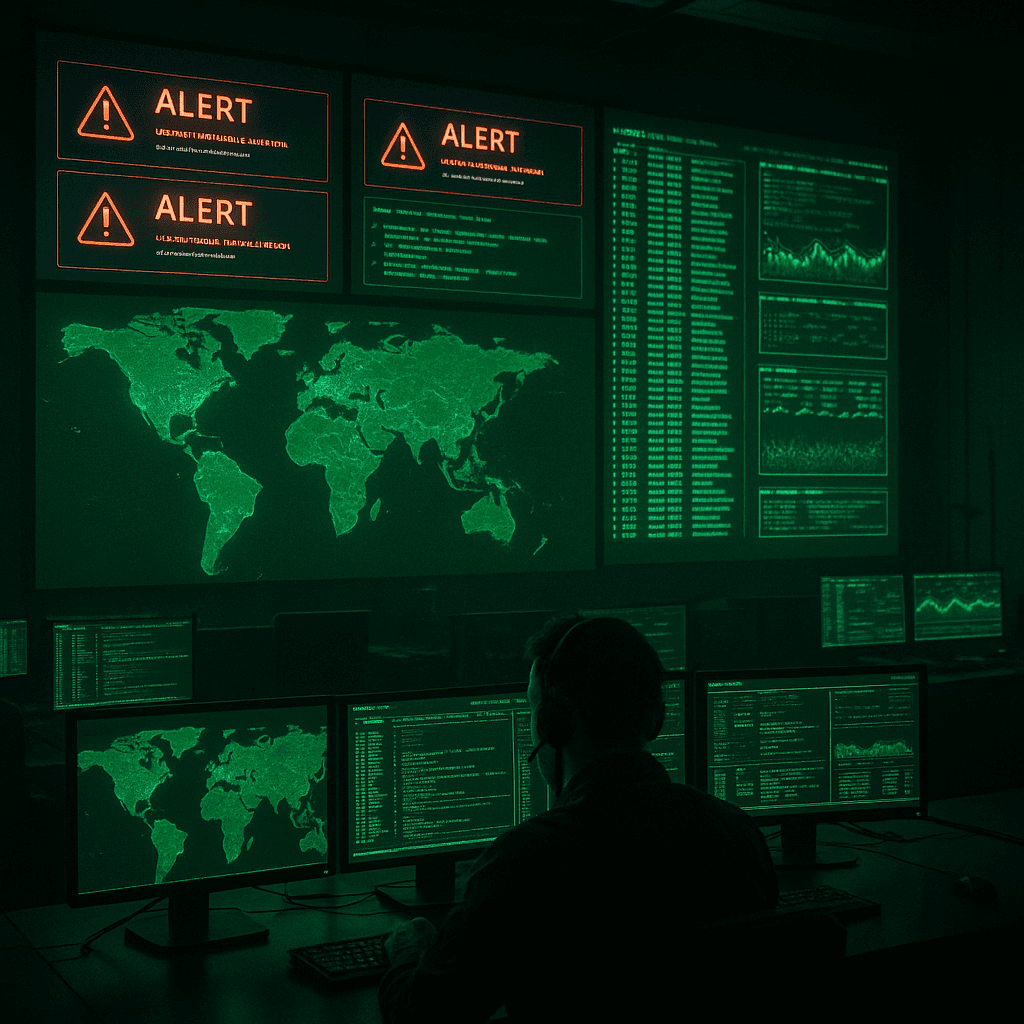
Intelligence Anywhere — MOGHQ's Real-Time Threat Intelligence Platform
Last updated: May 2026 | Best for: Executives, security professionals, risk managers, and operators with global exposure
The CFO calls. A manufacturing facility in Southeast Asia just went dark. No communication for six hours. The local news says there was civil unrest in the area. No one on your team can confirm anything. Meanwhile, your counterpart at a competitor's firm is already on a video call with their regional security team, with a full briefing on the situation, its likely trajectory, and three contingency plans ready to go.
How did they know before your team did?
The answer is simpler and more uncomfortable than you might think: they had a system. You were relying on the news.
The Problem with News-Based Intelligence
Most organizations track global risk the same way: someone on the team monitors news feeds, skims wire services, maybe sets up some Google Alerts, and reports back when something relevant surfaces. This is not intelligence. This is news consumption dressed up as strategy.
News-based intelligence has six fatal flaws:
1. It's Reactive
By the time an event appears in a general news feed, it has already happened. The incident at the port. The protest that shut down the highway. The cyberattack that disrupted the payment system. You are reading about what already occurred while your counterpart is reading about what is about to happen.
2. It's Unfiltered
A global news feed surfaces everything and prioritizes nothing. You are drowning in information with no framework for understanding what actually matters to your operations. The journalist covering a story about a labor dispute in a country where you have one supplier is given the same visual weight as a coup attempt in a country where you have twelve.
3. It Has No Context
News tells you what happened. It almost never tells you what it means for your business. A coup attempt in a country where you have zero operations is irrelevant. A labor strike at the port your primary supplier uses is existential. Without context, you cannot prioritize, and without prioritization, you cannot act.
4. It Doesn't Scale
A team of three people monitoring global news feeds can cover maybe twenty countries meaningfully. A company with operations in eighty countries needs something different. The manual approach breaks down exactly when the stakes are highest — when the scope of the operation is largest.
5. It Has No Threat Ranking
The news doesn't know what you care about. It doesn't know that your facility in sector 12 of a city matters more than the one in sector 4. It doesn't know that a 6.2 magnitude earthquake in an unpopulated region is less relevant to your supply chain than a 4.1 in a region where three of your suppliers are located. Without a threat-ranking framework calibrated to your actual exposure, everything looks equally important — which means nothing actually is.
6. It Doesn't Tell You When to Act
News tells you what happened. It doesn't tell you what to do about it. The gap between information and action — triage, assessment, contingency planning, response — is where most organizations lose critical hours. Sometimes days.
What Real Intelligence Looks Like
Real threat intelligence is not a news aggregator. It is a system for converting raw data into prioritized, actionable information — in time for that information to matter.
Intelligence Anywhere was built around a simple premise: the executives and operators who need global threat information most cannot afford to wait for a news cycle to surface it, filter it, and interpret it. They need a system that does that work before they walk into a room.
What Intelligence Anywhere Provides
Immediate threat-ranked alerts — Every data point entering the system is evaluated against a threat-ranking model calibrated to your operational footprint. A 4.1 earthquake in a region with no exposure is surfaced differently than a 4.1 in a region where three suppliers are located. You see what matters, ranked by actual risk, not journalistic prominence.
Global aggregation without noise — The platform aggregates data from thousands of sources: government travel advisories, NGO reports, local media, social media verification, seismic monitors, disease surveillance systems, maritime tracking, and proprietary data feeds. What you receive is synthesized, not raw.
Predictive context — The system doesn't just surface what happened. It provides context on what typically follows a given event type, what the likely near-term trajectory is, and what the historical precedent looks like. This is where intelligence becomes decision support.
Customized alert thresholds — You configure what constitutes a priority alert for your specific operations. Different regions, different threat categories, different escalation thresholds. The system learns your operational footprint and filters accordingly.
Who Needs This
Executives with global operations — CEOs, CFOs, and board members who need to understand the risk landscape their organization operates in, without relying on a staffer to synthesize news for them.
Security and risk teams —CSOs, regional security managers, and travel security professionals who need actionable intelligence, not headlines, to make operational decisions.
Supply chain operators — Procurement and supply chain leaders whose operations span multiple countries and who need to know about disruptions before they become crises.
Journalists and investigators — Professionals operating in sensitive regions who need real-time situational awareness and threat detection.
NGOs and humanitarian operators — Organizations with field staff in unstable regions who need the same quality of intelligence that large corporations have historically reserved for themselves.
The Intelligence-to-Action Gap
Most organizations have a working intelligence process for their domestic operations — security teams, local law enforcement contacts, insurance requirements. Fewer have extended that to their global footprint. And even organizations with sophisticated domestic security programs frequently operate internationally with the intelligence equivalent of a flip phone in a smartphone world.
This is not a technology gap. It's an organizational priority gap. Most executives understand that global risk is real. Fewer have made the investment in a system that surfaces that risk in time for it to matter.
Intelligence Anywhere is built for the organization that has made that decision.
The Cost of Inaction
A single undetected global risk event — a supplier disruption, a port closure, a security incident at a facility, a political event that destabilizes a key market — can cost more than a decade of subscription fees for a real-time intelligence platform.
The math is straightforward. If your organization has meaningful operations in more than three countries, you are already in the global risk management business. The question is whether you are running that function systematically or reactively.
The executive at the competitor's firm who had the briefing ready before your team confirmed the incident didn't have better instincts. They had a better system.
What You're Getting With Intelligence Anywhere
- Real-time threat-ranked dashboard — Global visibility across all operational regions, ranked by actual risk to your footprint
- Custom email alerts — Configure thresholds and receive immediate notification when a threat event meets your criteria
- Source aggregation at scale — Thousands of data sources, synthesized and filtered, not just presented
- Predictive context — Historical precedent and likely near-term trajectory for each threat category
- Customizable to your footprint — Regions, threat categories, severity thresholds — all configurable to your specific exposure
The world doesn't warn you before it changes. Intelligence Anywhere gives you the best approximation: seeing it happen in real time, ranked by what matters to your operations, with the context to know what to do about it.